A microfiber cloth can make quick work of dust, fingerprints, and everyday smudges. But the same fine fibers that collect dirt can also collect lint and laundry-product residue. If a cloth starts streaking glass, pushing water around, or leaving fuzz behind, its washing routine is worth a closer look.
The goal is not to make microfiber smell strongly perfumed or feel like a fluffy bath towel. It is to remove the soil while preserving the cloth's intended cleaning performance. Start with the manufacturer's instructions, keep unlike materials apart, and use a repeatable process that suits the jobs your cloths actually do.
Check what kind of cloth you have
Microfiber describes very fine fibers, not one universal product with one universal care label. Glass cloths, general-purpose cleaning cloths, mop pads, and specialty detailing towels may have different constructions, edging, backing, and temperature limits. Read the sewn label or look up the manufacturer's care instructions before choosing a wash or dry setting.
If you own several types, keep the instructions together in a note near your laundry area. A cloth with a foam layer, hook-and-loop backing, or decorative edge may need treatment different from a simple cleaning square. When instructions are missing, do not assume boiling water, bleach, or the hottest dryer cycle is a safe restoration method. Contact the manufacturer or choose a conservative process until you know more.
Separate microfiber from lint-producing laundry
Cotton bath towels, fleece, and other lint-shedding fabrics can leave fibers lodged in microfiber. Wash microfiber separately from those items rather than adding a few cloths to the family towel load. Shake off loose, nonhazardous debris over an appropriate waste container before washing so it does not travel through the rest of the load.
Sort microfiber by use as well as color. Cloths used on a bathroom floor should not automatically share a routine or storage bin with cloths intended for kitchen counters or glass. Color coding can help people choose the right cloth, but it works only when everyone knows what the colors mean and keeps clean and used stock separate.
Identify the soil before it reaches a machine
Everyday household dust and light cleaning residue are different from solvents, concentrated chemicals, flammable oils, or unknown workshop contamination. Do not place solvent- or oil-contaminated rags in an ordinary washer or dryer. Follow product safety instructions and the appropriate workplace or local disposal process. Ordinary laundry service should never be assumed to accept hazardous cleaning textiles.
For business cleaning cloths, make sure the person arranging laundry knows what products were used. A vague description such as "just cleaning rags" is not enough when chemical compatibility or contamination matters. Keep questionable items isolated, identify them clearly, and obtain acceptance instructions before transporting anything to a shared laundry or service provider.
Choose detergent for rinsing, not fragrance
Use a detergent permitted by the cloth manufacturer and measure it for the actual load. More product does not automatically improve cleaning; excess detergent can be difficult to rinse and may leave the cloth feeling coated. Avoid adding scent products or improvised mixtures in an effort to make a used cloth seem fresher.
Do not use fabric softener on microfiber unless the manufacturer specifically says it is suitable. Softening products can interfere with the performance people want from cleaning cloths. Check combination detergent labels, too: a product that includes a softening additive may not be the right choice. If a cloth has been washed with softener, consult its care guidance rather than assuming one aggressive treatment will restore it.
Match temperature and cycle to the label
There is no single correct wash temperature for every microfiber product. Choose a setting allowed by the manufacturer that fits the soil level, and leave enough room for water and detergent to circulate. A densely packed load can rinse poorly, while a cycle that is unsuitable for the backing or stitching can shorten the cloth's useful life.
For a broader explanation of fabric-safe choices, see the wash temperature guide. Do not interpret a general laundry recommendation as permission to exceed a microfiber label's limit. When the cloth manufacturer allows an extra rinse and detergent residue remains a concern, that may be more useful than simply increasing detergent or heat. Follow equipment instructions and avoid mixing cleaning chemicals.
Dry gently and skip dryer sheets
Air drying is a practical choice when the cloth's instructions allow it. Spread cloths out where they can dry completely rather than leaving them bunched in a damp pile. If machine drying is permitted, use the label's heat limit and avoid adding dryer sheets. High heat is not a universal shortcut for getting microfiber ready faster.
Check the dryer drum and lint screen before the load. A recent towel or blanket load may leave loose lint behind, so keep the equipment clean and do not combine microfiber with shedding fabrics during drying. Remove cloths when they are dry instead of leaving them through repeated unnecessary heat cycles. Inspect bindings, loops, and backing for damage before returning them to use.
Judge performance with a simple clean-surface check
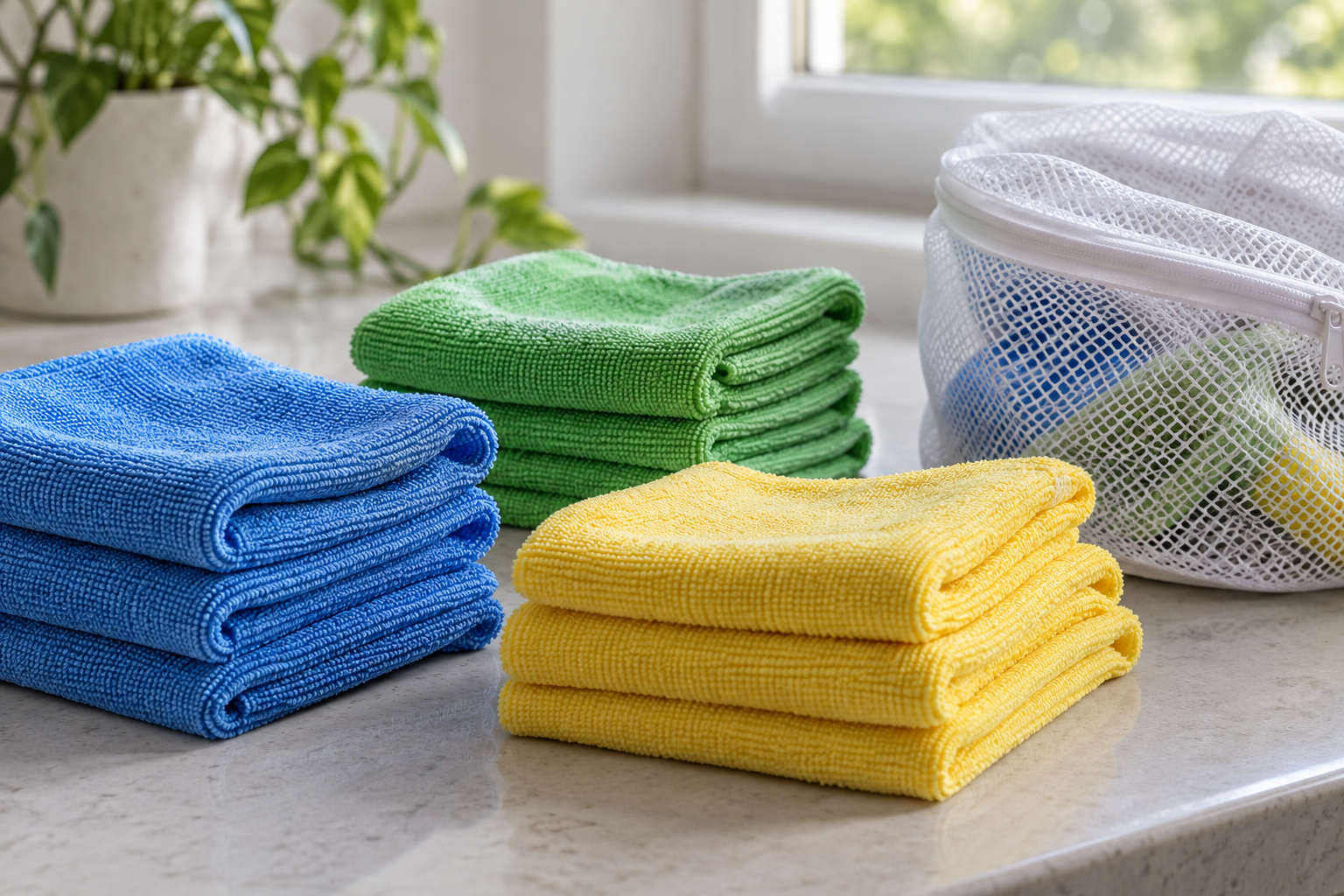
Once a cloth is clean and dry, test it on an appropriate, noncritical surface using the method the manufacturer recommends. A glass cloth that leaves lint or smears may have residue, trapped debris, damage, or simply be the wrong type for that task. Do not keep wiping a delicate finish with a cloth that feels gritty.
Check whether the issue affects one cloth or the whole batch. One damaged cloth suggests an item problem; a whole batch that feels coated points toward the shared wash process. Review sorting, product choice, dosing, rinsing, and drying before replacing everything. Retire worn or contaminated cloths from sensitive tasks, and discard them appropriately when they are no longer safe or useful.
Keep clean cloths protected between jobs
Store fully dry cloths in a clean drawer, covered container, or designated shelf away from dirty laundry and chemical spills. Keep task groups separate. A clean glass cloth does little good if someone drops it into the used bathroom-cloth bin or stores it under a leaking product bottle.
For a household, a small collection of clearly assigned cloths may be enough. A cleaning business needs a more deliberate rotation, with enough clean stock available while used items move through the wash. Review the general towel care guide for habits such as complete drying and clean storage, but retain microfiber-specific product and heat restrictions instead of adopting a cotton-towel routine unchanged.
Ask about service compatibility before outsourcing
WaveMAX's standard drop-off laundry service describes a process that includes softener, dryer sheets, and high-heat drying. That standard process is not automatically appropriate for microfiber cleaning cloths. Before bringing a batch, explain the fiber type, care instructions, cleaning products used, and any no-softener or heat restrictions, then confirm whether the team can accommodate them.
If you prefer to manage those settings yourself, explore self-service laundry and ask about machine suitability before washing commercial cleaning textiles. Businesses can use the commercial laundry inquiry page to describe their needs, without assuming acceptance of every kind of rag or contamination. For local questions, use WaveMAX's hours and location page to contact the Thornton team.
Build a routine the cloth can tolerate
Microfiber care works best when it is consistent: know the product, separate lint and incompatible soils, measure detergent, avoid unsuitable additives, respect heat limits, and store everything fully dry. Protecting a useful cloth is usually less about a dramatic deep-clean trick and more about preventing the same small mistakes from happening every wash day.