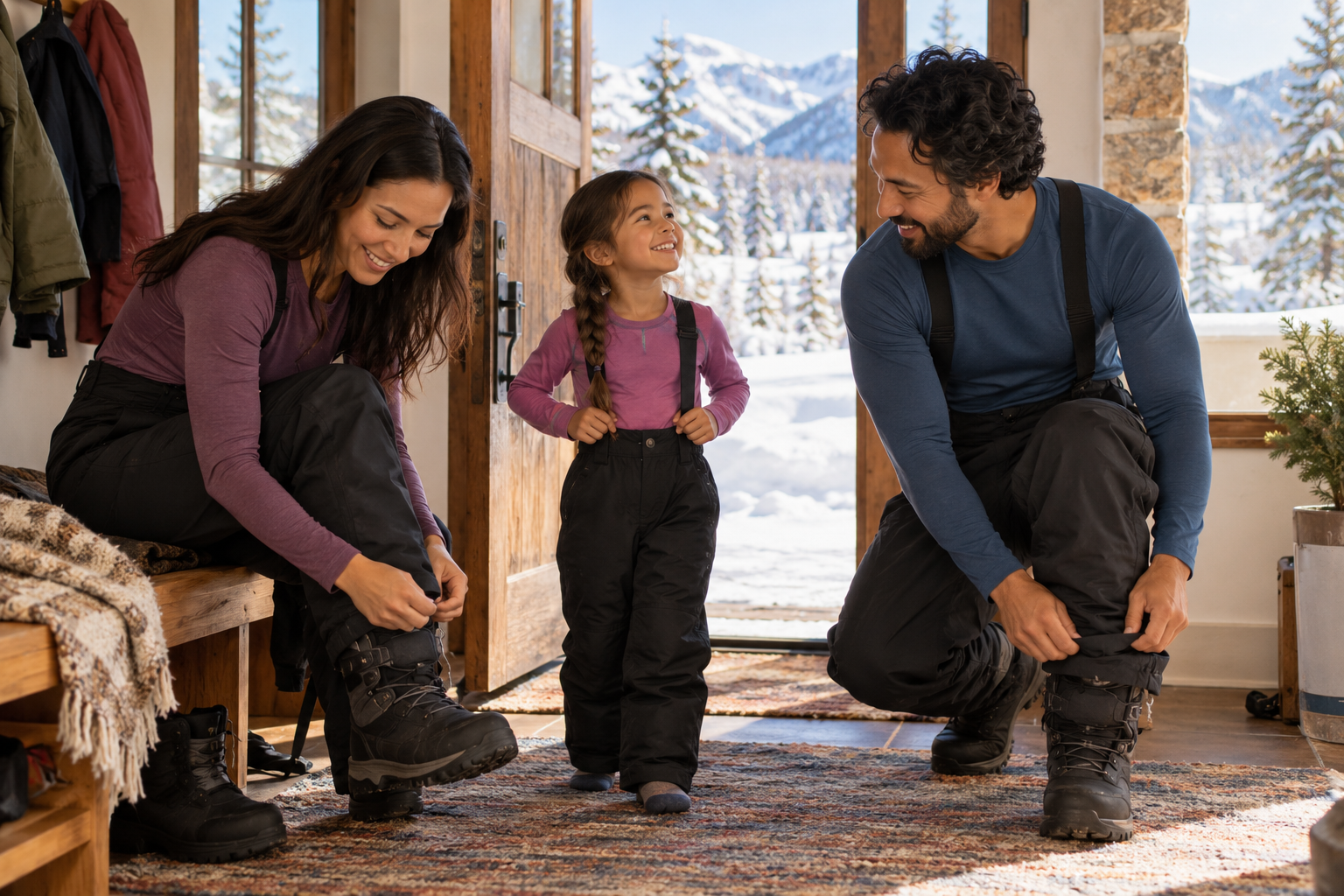
A good day in the snow can leave behind damp base layers, muddy cuffs, and a pile of gear that does not belong in one ordinary laundry load. The shirt against your skin and the pants keeping snow out may need very different care, even when they look equally sturdy.
The safest way to wash ski base layers and snow pants is to sort by construction, follow each garment's instructions, and plan drying before you start. For Thornton households getting ready for another mountain weekend, that little bit of preparation can prevent a rushed wash from becoming an expensive mistake.
1. Read the whole label before choosing a cycle
Start with the sewn-in care label and the manufacturer's instructions for the exact garment. Find the washing method, maximum temperature, permitted detergent, and drying directions. If the tag is faded, look up the model or contact the maker rather than borrowing instructions from a similar-looking pair of pants.
Our care label guide can help you recognize the symbols, but the garment's specific requirements come first. A maximum temperature is a limit, not an instruction to always choose the hottest setting. Check restrictions on bleach, softener, ironing, and professional cleaning as well. A garment with electrical components, specialty insulation, leather trim, or unusual bonded details needs particular attention before any machine wash.
2. Separate base layers from weatherproof shells
Make separate groups for wool or wool-blend layers, synthetic next-to-skin clothing, and outerwear with membranes or water-repellent finishes. Do not assume that everything labeled ski wear can share the same detergent and dryer setting. Color, soil level, and fabric weight still matter within each group.
A lightweight thermal shirt can snag against hooks and hardware on heavier pants. Muddy cuffs can also introduce soil into a load of lightly worn layers. Empty every pocket, remove tissues and passes, and follow the maker's directions for closing zippers and fasteners. Brush off loose, dry dirt gently before washing; do not scrub a coating or taped seam aggressively.
3. Give merino and wool blends their own plan
Some merino base layers are machine washable; others require a different method. Use the cycle, detergent type, and temperature allowed by the manufacturer. Do not treat a wool blend as ordinary cotton just because most of the garment feels soft and familiar.
Check detergent compatibility instead of assuming that a product marketed for all laundry is suitable for wool. Avoid bleach or stain treatments that the garment or product label rules out. If flat drying is specified, arrange a clean drying surface before washing. Support the damp garment rather than stretching it by the shoulders. A wool item that requires special care should stay out of an otherwise convenient mixed load.
4. Wash synthetic layers without adding residue
Polyester and other synthetic base layers often collect sweat and body oils. Turn them inside out if the maker recommends it, use an appropriate measured detergent dose, and leave enough room for movement and rinsing. Extra detergent is not a shortcut to fresher clothing; it can make rinsing more difficult.
Avoid fabric softener when the manufacturer prohibits it, and check whether dryer sheets are also unsuitable. Our sports laundry guide covers everyday habits such as separating damp workout clothes and addressing odor promptly. Those habits help here, too, but a ski layer's own label still controls the wash. Do not apply a blanket high-heat rule to stretchy cuffs, elastic waistbands, or technical fabric.
5. Treat snow pants as technical outerwear
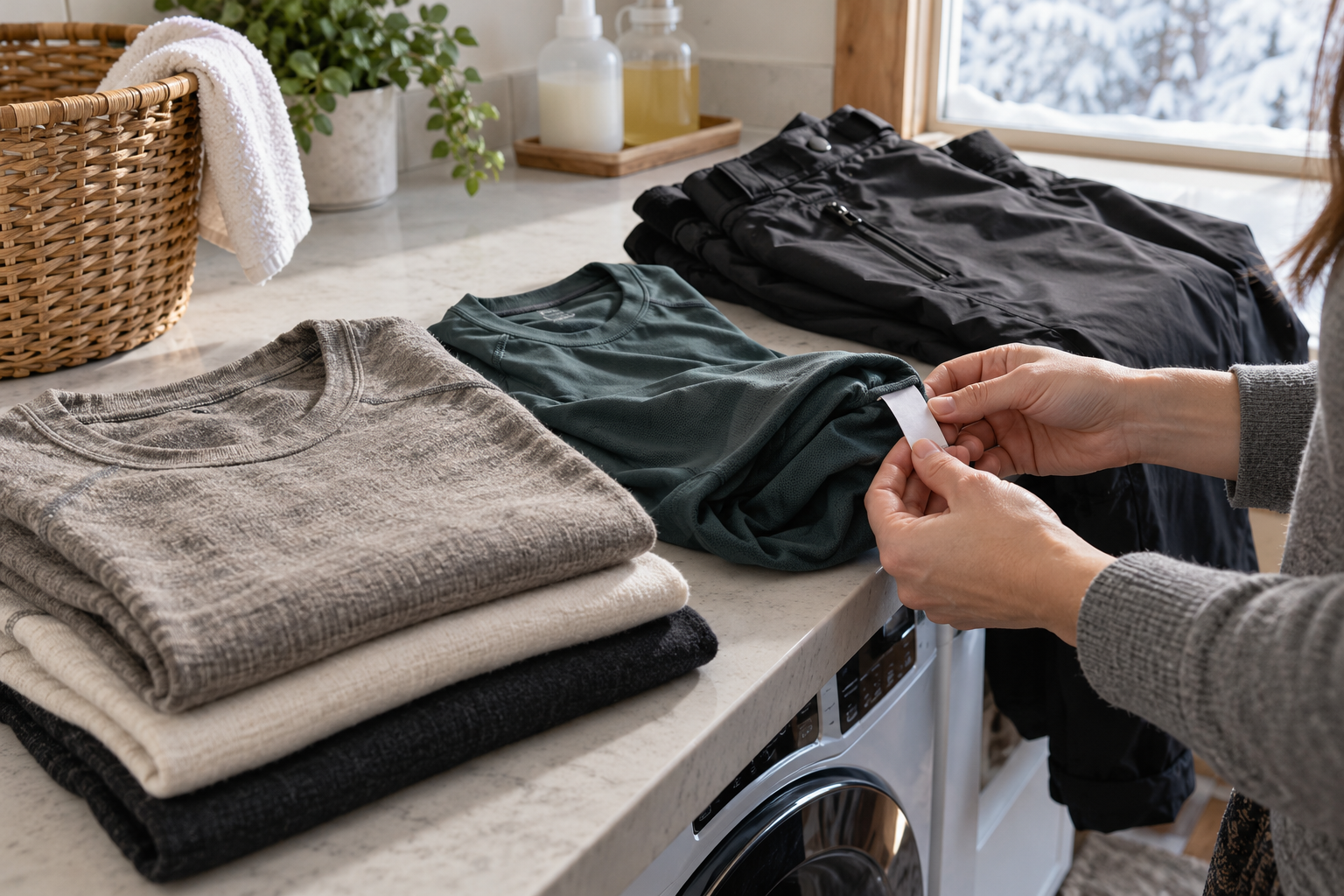
Snow pants may combine a face fabric, waterproof membrane, seam tape, lining, and insulation. That construction is why instructions can differ from those for an ordinary pair of trousers. For example, GORE-TEX outerwear guidance excludes fabric softeners, powder detergents, bleach, and stain removers; check whether your particular garment carries that technology and follow its maker's directions.
Use only compatible products and the specified amount. Do not add a favorite laundry booster simply because it works on towels. If a pretreatment is not expressly suitable, ask the manufacturer before using it on oily cuffs or stained knees. Cleaning can help remove dirt and residue, but it cannot repair peeling seam tape, holes, or a damaged membrane.
6. Do not confuse cleaning with reproofing
Water beading on the surface is different from the garment's overall waterproof construction. Some outerwear instructions include a permitted heat step to reactivate a water-repellent finish; other items have different restrictions. Never generalize a tumble-drying recommendation to every shell or insulated garment.
If water no longer beads after correct care, consult the maker about whether a compatible treatment is appropriate. Follow both garment and treatment instructions, including any limits on spray-on versus wash-in products. Avoid promising yourself that another coating will fix a leak. Worn fabric or damaged construction may need repair, and a laundry cycle is not a waterproofing guarantee.
7. Choose a washer for control, not just capacity
A machine should accommodate the load without packing it tightly, but space is only one part of the decision. You also need compatible cycle settings, product dispensers, and a drying method that meets the labels. Keep delicate layers separate from heavy, abrasive items even when there is room to combine them.
WaveMAX's self-service laundry option lets you manage suitable washable loads yourself. Ask an attendant about machine operation and available settings before loading specialty gear. Bring the instructions with you if necessary. If the required conditions are not available, choose another care method rather than improvising. Machine capacity does not override a hand-wash-only or no-tumble-dry label.
8. Confirm service compatibility before dropping off
WaveMAX's standard drop-off laundry service describes fabric softener, dryer sheets, and high-heat drying as part of its usual process. That routine may conflict with technical outerwear or base-layer instructions. Do not assume that a bag marked ski clothes will automatically receive specialized garment care.
Discuss each item's restrictions before leaving it, and confirm whether the requested handling is available. The published standard service does not include hang drying. Separately bag or retain anything that cannot follow the agreed process. The same questions apply when considering pickup and delivery: convenience is useful only when the care requirements and service match. Do not book specialty gear on the assumption that every exception can be accommodated.
9. Finish drying before the next adventure
Follow the approved drying method all the way through. Check cuffs, waistbands, pockets, and thicker areas for remaining moisture before packing gear into a bag or closet. Keep garments away from direct heat sources unless the maker explicitly permits that exposure. A radiator or fireplace is not a substitute for a controlled drying instruction.
Build a simple return-home routine: unpack damp clothing promptly, separate items by care needs, wash when required, and allow enough time to dry. For eligible machine-washable loads, check WaveMAX's current hours and location before your next Thornton laundry visit. A few deliberate choices now can leave you with clean, comfortable gear and one less chore before the next snowy morning.