The meal is over, the dishes are stacked, and the tablecloth tells the story of a good evening. Cloth napkins and table linens make a holiday gathering feel welcoming, but cleaning them can seem more complicated than washing the usual weekly clothes.
You do not need one aggressive treatment for everything on the table. You need a short sorting routine, a clear understanding of the fabrics, and enough time to dry them properly. Here is how to wash tablecloths and cloth napkins after holiday hosting without treating every spill, trim, or material the same way.
1. Separate washable linens from specialty pieces
Read the care labels before carrying the whole table straight to the washer. Plain cotton, linen, polyester blends, and decorative specialty fabrics may have different washing and drying requirements. A familiar fiber name is not permission to ignore embroidery, coatings, backing, metallic threads, or delicate trim.
Set aside anything labeled dry-clean-only or requiring a method you cannot provide. If a vintage cloth has no readable label, look for the maker's guidance or ask a qualified textile-care professional. Sentimental pieces are poor candidates for an experimental wash. Keep the washable everyday linens moving through the routine while you decide how to handle the special items separately.
2. Clear the table before stains become an afterthought
Remove napkin rings, clips, candles, decorative pins, and other nonfabric pieces. Check folded napkins for food scraps and utensils. Gently lift away solid food without grinding it deeper into the fibers, then inspect the cloth in good light so you know which spots need attention.
Avoid piling damp, food-soiled linens into a sealed bag for days. If you cannot wash immediately, follow the care instructions for any prompt treatment and arrange a sensible short-term holding plan. Keep them away from clean linens. Do not leave soaked fabrics unattended or assume a long soak is safe for every dye, finish, or decorative edge.
3. Match the treatment to the spill and the fabric
A gravy spot, red wine mark, and candle-wax deposit are not the same problem. Our Thanksgiving stain guide is a useful starting point for identifying common holiday spills. Before acting, confirm that the suggested method is compatible with both the fabric label and the stain-removal product you intend to use.
Test a permitted product on a hidden area as directed. Avoid vigorous rubbing that can roughen fabric or damage embroidery. Do not combine cleaning products or keep adding treatments because a mark has not vanished immediately. If the care label forbids bleach, that restriction includes products that might otherwise seem gentle. When a treatment is unclear, stop and obtain fabric-specific advice.
4. Sort by color, construction, and soil level
A dark red napkin does not automatically belong beside a white tablecloth, even when both are cotton. Separate whites, darks, and colors that may release dye. New or uncertain-color linens deserve extra caution. Also separate heavily soiled kitchen towels from table linens used only for serving and dining.
Group items with compatible washing and drying directions, not simply matching table decorations. Lightweight napkins may tangle inside a large cloth, and delicate trim may snag against unrelated garments. Check for loose threads, damaged seams, and small tears before washing. Dealing with a minor repair before another full cycle can be easier than finding a larger tear afterward.
5. Give large tablecloths room to move
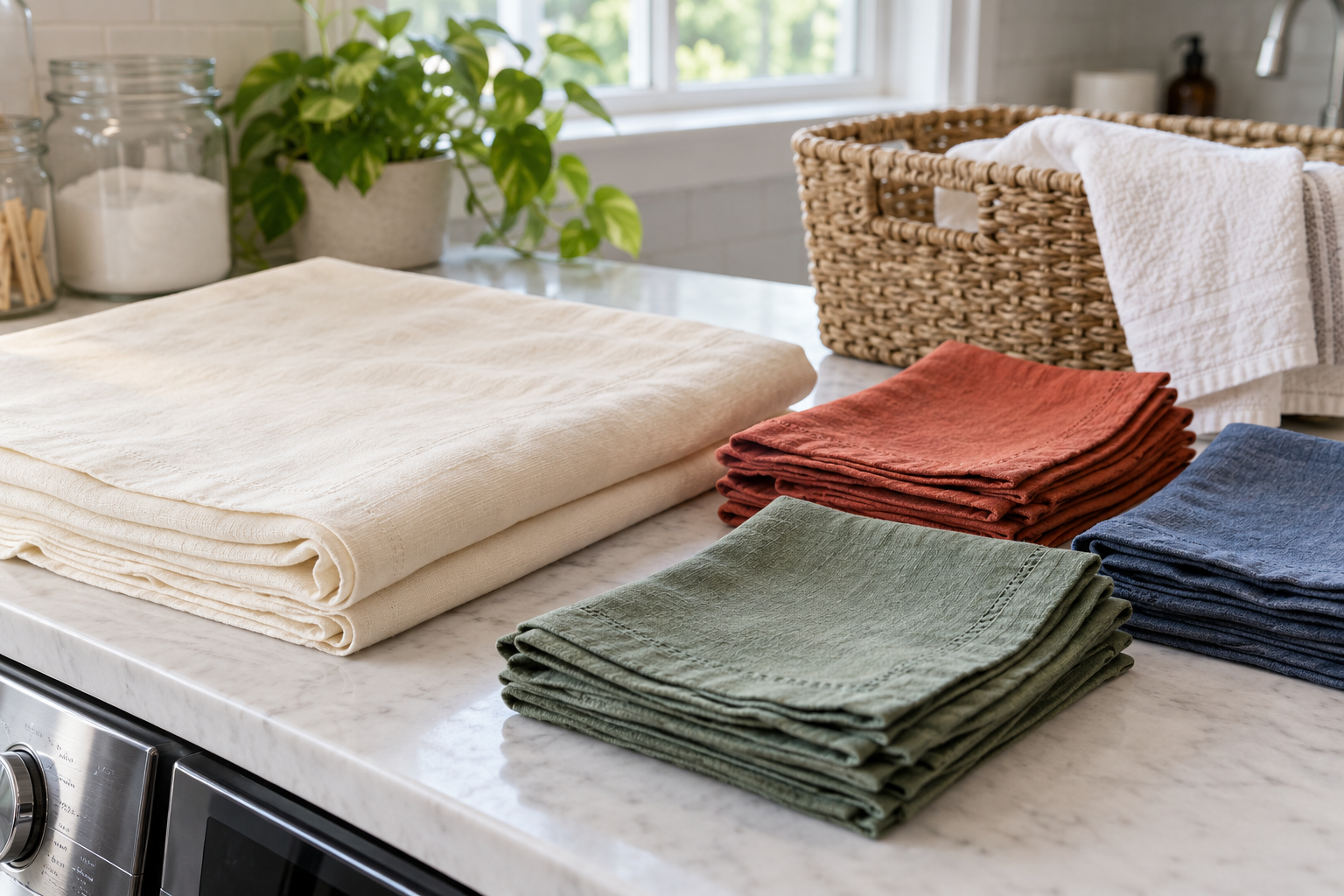
Unfold a large cloth before loading rather than pushing it into the drum as a dense bundle. Follow the machine's loading instructions and leave the items room to circulate. More capacity can be helpful for bulky household laundry, but it is not a reason to combine fabrics with conflicting care needs.
WaveMAX's self-service laundry machines can be an option for suitable washable loads when your home washer is crowded. Ask an attendant about machine capacity and controls if you are unsure. Keep a separate plan for pieces that need hand washing, specialty treatment, or a drying method the equipment cannot provide. The correct machine is the one that fits the load and its instructions.
6. Pick temperature and detergent deliberately
Choose the wash temperature allowed by the most restrictive care label in a compatible load. Our wash temperature guide explains why hotter is not always better. The fabric, dyes, finish, and type of soil all affect the decision. Do not assume white table linens can always tolerate the same hot cycle as a plain white towel.
Measure detergent according to the product and machine directions, taking load size and soil into account. More soap does not guarantee cleaner linens and may make thorough rinsing harder. Use additives only when both garment and product instructions allow them. If you are uncertain about softener or another optional product, leave it out until you have checked the manufacturer's recommendation.
7. Inspect before applying dryer heat
When washing finishes, open out the linens and look again at the areas you treated. Inspecting before drying gives you a chance to decide whether another label-safe step is warranted. Heat can make some remaining stains more difficult to address, so avoid automatically sending every piece through a hot dryer.
If a mark remains, do not keep escalating treatments without checking compatibility. Some stains will not come out completely. A faint mark on an everyday napkin may be preferable to damaged fibers or a faded patch caused by repeated aggressive treatment. For valuable pieces, seek professional advice rather than turning one spot into a larger problem.
8. Dry, smooth, and finish according to the label
Use the permitted dryer setting or air-drying method, and remove pieces promptly when appropriate to reduce deep wrinkles. Do not crowd the dryer with a tightly tangled cloth. Check whether seams, hems, and folded edges are dry before deciding that the whole item is ready for storage.
If you want a crisp finish, follow the ironing instructions rather than applying the highest heat to every fabric. Some pieces may be ironed while slightly damp, but that is a finishing step, not a reason to store them damp. Keep any heat-sensitive coating, print, or trim in mind. This home-care guidance is not a promise that laundry service includes pressing or specialty finishing.
9. Confirm the right service before handing linens over
For eligible everyday loads, WaveMAX's drop-off laundry service can take a chore off the post-holiday list. Explain the fabric types, stains, and care restrictions before leaving the order. The published standard process uses fabric softener, dryer sheets, and high-heat drying, and does not include hang drying. Those details may not suit every table linen.
Ask whether your particular items and instructions can be accommodated. If you prefer pickup and delivery, verify service availability and the same handling requirements before booking. Do not assume that embroidered heirlooms, coated cloths, or items needing pressing belong in a standard wash-dry-fold order. A clear conversation prevents mismatched expectations.
10. Store clean linens for the next gathering
Fold linens only when they are fully dry, and store them in a clean, dry space away from spills and household chemicals. Keep sets together if that makes the next table easier to assemble. Check occasionally for moisture or a musty smell rather than discovering a storage problem just before guests arrive.
A practical holiday routine is simple: identify the fabric, address compatible stains, wash in suitable groups, inspect, and dry completely. When your washable household loads need more room or a little help, check WaveMAX's hours and location and choose the service that fits the items. The goal is a welcoming table next time, without turning the morning after hosting into an avoidable laundry emergency.