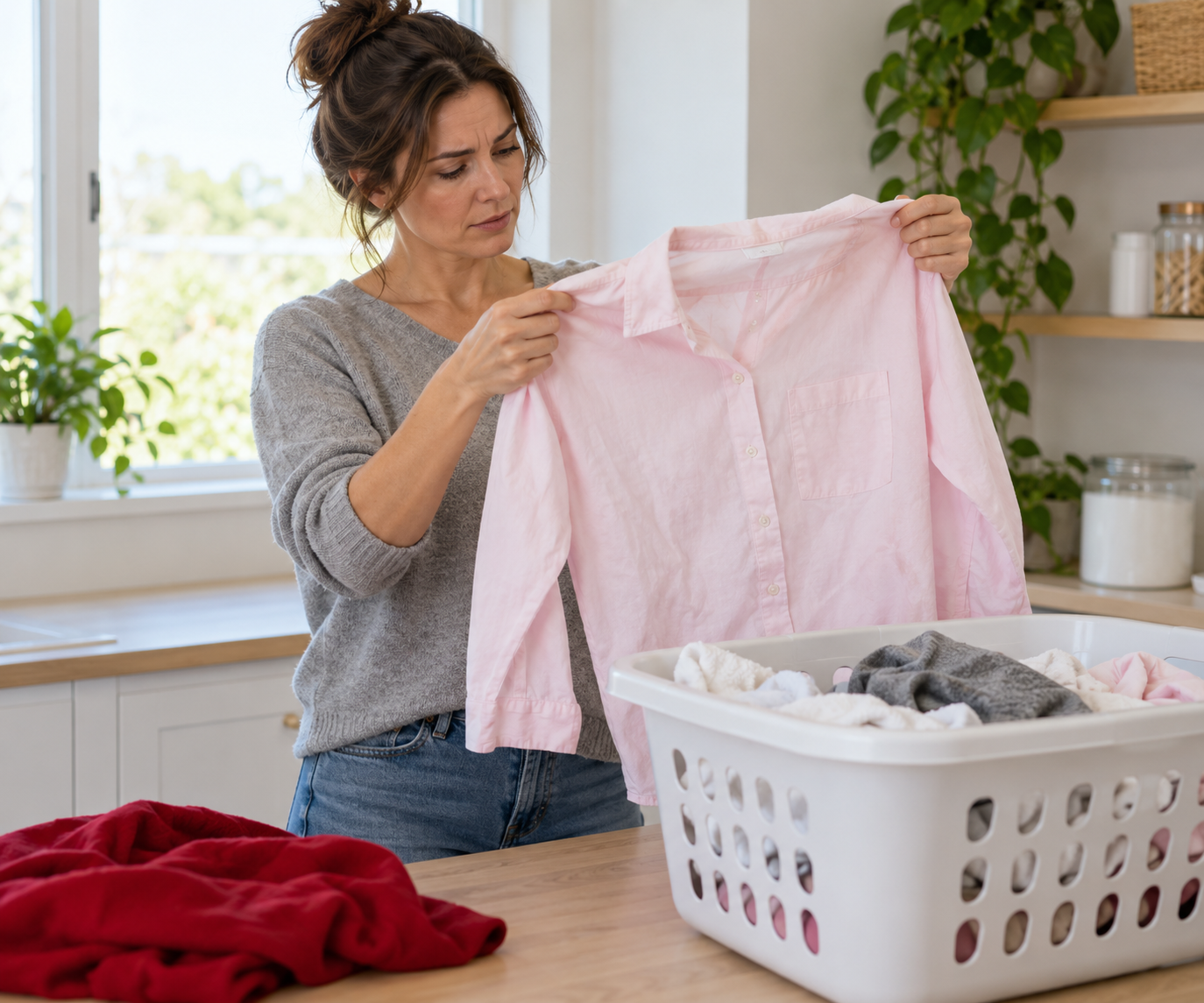
You open the washer expecting clean clothes and find that a pale shirt has turned pink or a light towel has picked up blue streaks. It is a frustrating surprise, but the next step matters more than the mistake that caused it: pause before putting anything affected into the dryer.
Color bleeding happens when dye leaves one item and transfers to another. Some transfers respond to prompt, fabric-safe treatment; others are permanent. A calm inspection and a compatible wash plan are safer than grabbing several stain products and hoping the strongest combination will work.
1. Stop before the dryer or iron
Keep the affected items away from dryer heat and ironing while you assess them. The American Cleaning Institute advises not drying clothes affected by color transfer before attempting appropriate treatment. Heat can make recovery more difficult, and it removes the opportunity to inspect the load first.
Do not assume the entire load needs to be rescued in the same way. Unfold each item in good light and distinguish actual transferred color from wet fabric that simply looks darker. Keep items awaiting treatment separate from clean laundry, and handle them promptly rather than leaving a damp heap in a closed machine for an extended period.
2. Remove the likely source of the dye
Look for a new brightly colored garment, a dark item mixed with lights, or a piece with an unfamiliar care history. Remove the suspected source and keep it apart from affected pale clothing. Check cuffs, pockets, and layered garments so a small red sock or colored accessory does not stay hidden inside another item.
Avoid immediately rewashing everything together. The same garment may release more dye in the next cycle. Inspect the washer drum and gasket for forgotten items or visible residue, and follow the machine's cleaning guidance if needed. At a laundromat, ask an attendant about machine operation rather than taking apart a dispenser or adding an improvised cleaning mixture.
3. Read the affected items' care labels
The fabric receiving the dye determines what treatments are possible. A white cotton shirt, a cream wool sweater, and a printed synthetic blouse do not share one safe rescue method. Our care label guide can help you interpret the instructions, but manufacturer directions for the exact garment take priority.
Separate dry-clean-only pieces, delicate items, and anything with uncertain care requirements. Read the restrictions on water temperature, bleach, and drying. A garment can look plain white while containing colored stitching, elastic, or trim that rules out a particular product. If the label is missing and the piece is valuable, ask a qualified textile-care professional before proceeding.
4. Choose one compatible treatment, not a chemical mixture
For washable items, consider a prompt rewash using detergent and, only when appropriate, a product specifically permitted by the fabric and product labels. Follow the directions for amount, water temperature, contact time, and rinsing. Do not substitute a household cleaning product for one intended for laundry.
Never mix bleach with vinegar, ammonia, other bleach products, or unrelated cleaners. Do not pour one treatment over the remains of another. Rinse and follow product directions before changing methods, and seek manufacturer guidance if the sequence is unclear. A stronger smell or more fizz is not evidence that a treatment is working safely.
5. Treat bleach labels as restrictions, not suggestions
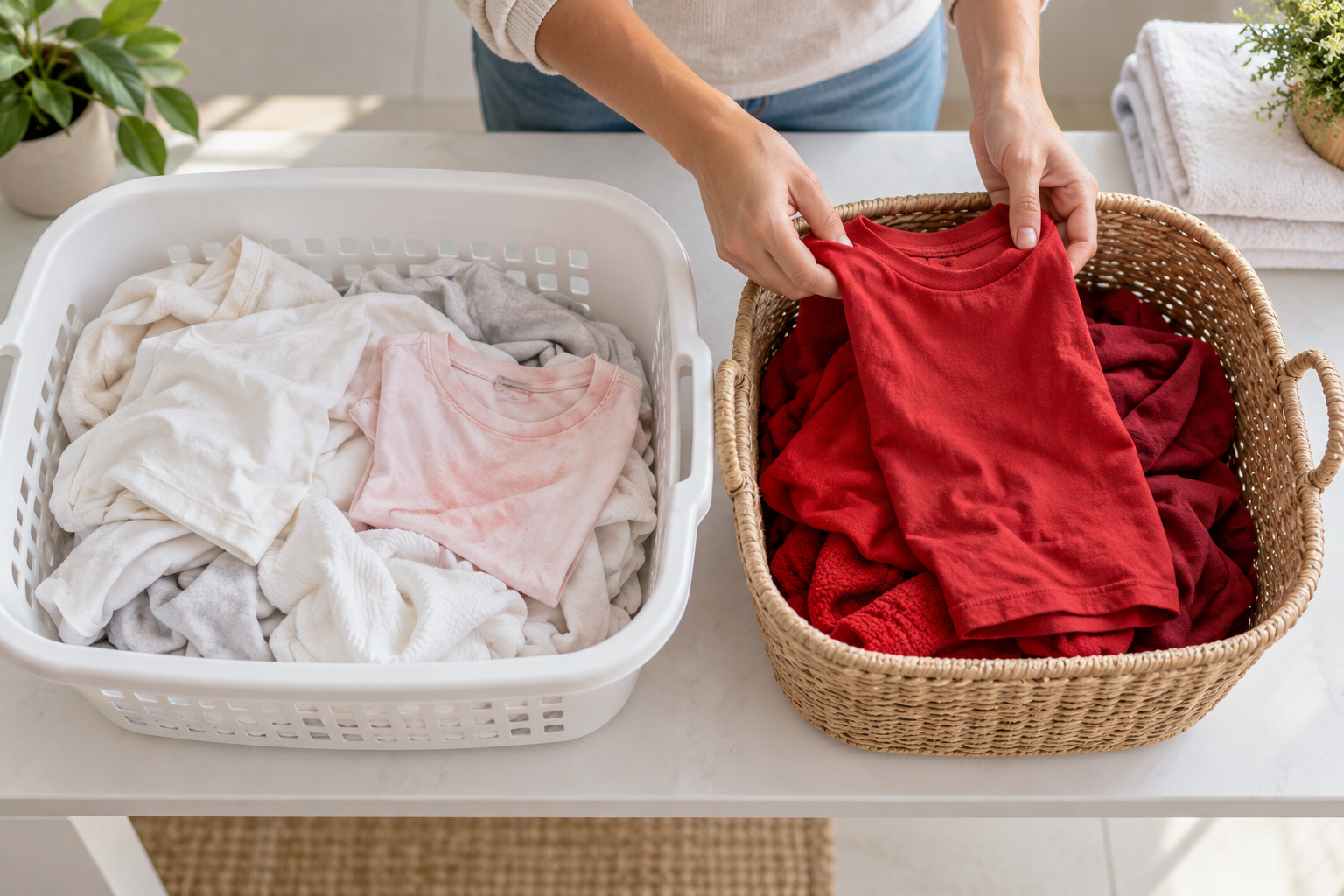
A bleach product is not automatically safe because it says oxygen, color-safe, or all-fabric on the package. Check the exclusions for fibers, dyes, finishes, and trim. Wool, silk, leather components, and some decorative details may need different care. A no-bleach garment label should not be overridden by a general claim on a bottle.
White clothing is not automatically chlorine-bleach compatible, either. Use only a product and process allowed for the particular item. If directions call for a hidden-area test, perform that test as specified and assess it before treating a visible area. When garment and product guidance conflict, do not proceed with that combination.
6. Be cautious with color-removal products
A packaged color remover is different from ordinary detergent or a general stain pretreatment. Some products are intended for restoring certain white fabrics, while others have specific applications and exclusions. They may also remove the garment's original dye rather than selectively lifting only the unwanted transfer.
Read the complete instructions before deciding whether one belongs in your plan. Do not use a product on a printed or multicolored item based only on a short tip found online. The American Cleaning Institute's dye-transfer guidance includes product-specific restoration approaches, but that is not a guarantee of success on every fiber. For an irreplaceable garment, professional assessment may be the better first step.
7. Recheck the result before deciding what comes next
After the permitted wash or treatment, inspect the affected areas again in good light. Compare cuffs, seams, and hidden folds as well as the most obvious stain. If the unwanted color remains, check whether the product instructions permit another treatment rather than automatically repeating it.
Know when to stop. Repeated chemical exposure, agitation, or heat can damage fabric even if the stain improves a little. If an item starts fading unevenly, weakening, or changing texture, further home experiments may make the outcome worse. No laundry process can promise to reverse every dye transfer. Sometimes accepting a faint tint, repurposing an item, or seeking professional advice is the sensible result.
8. Reset your sorting routine for the next load
Preventing another transfer starts before the washer door closes. Use our laundry sorting guide as a starting point, then separate by colorfastness, fabric care, and soil level. New or uncertain dark and vivid garments deserve their own cautious wash plan. A previous successful mixed load does not prove every future combination is safe.
Follow the permitted temperature rather than assuming cold water prevents all dye release. Avoid leaving wet garments pressed together unnecessarily after washing. If you use a dye-catching accessory, treat it as an optional aid, not permission to ignore sorting or care labels. Empty pockets and unfold bundled items so the next hidden sock does not repeat the problem.
9. Use the laundromat for a suitable wash plan
WaveMAX's self-service laundry option can help with appropriately sorted, machine-washable loads. Bring your garment instructions, measure products correctly, and ask an attendant about machine settings if you need help. Do not introduce a specialty treatment into a shared machine without confirming that both the product and facility permit its use.
If you are considering drop-off laundry service, explain the transfer before leaving the order and ask whether the items and any handling restrictions can be accepted. Standard wash-dry-fold should not be understood as a specialized dye-restoration service. Keep delicate or treatment-incompatible pieces out of the bag unless the care plan has been explicitly discussed and accepted.
10. Make the next step smaller and clearer
If the damaged load has interrupted a busy week, focus on what you can safely complete now. Separate unaffected essentials, organize the affected pieces by label, and choose one evidence-based next step for each group. Resist the urge to sacrifice the rest of the afternoon to a chain of stronger, untested remedies.
Check WaveMAX's current hours and location when you need a suitable machine for the remaining laundry. Pickup and delivery may be useful for eligible ordinary loads, but ask about exclusions and service details before booking. The best immediate response to color bleeding is not a guaranteed rescue trick: it is avoiding heat, separating the problem, and protecting the fabric while you decide what is safe to try.