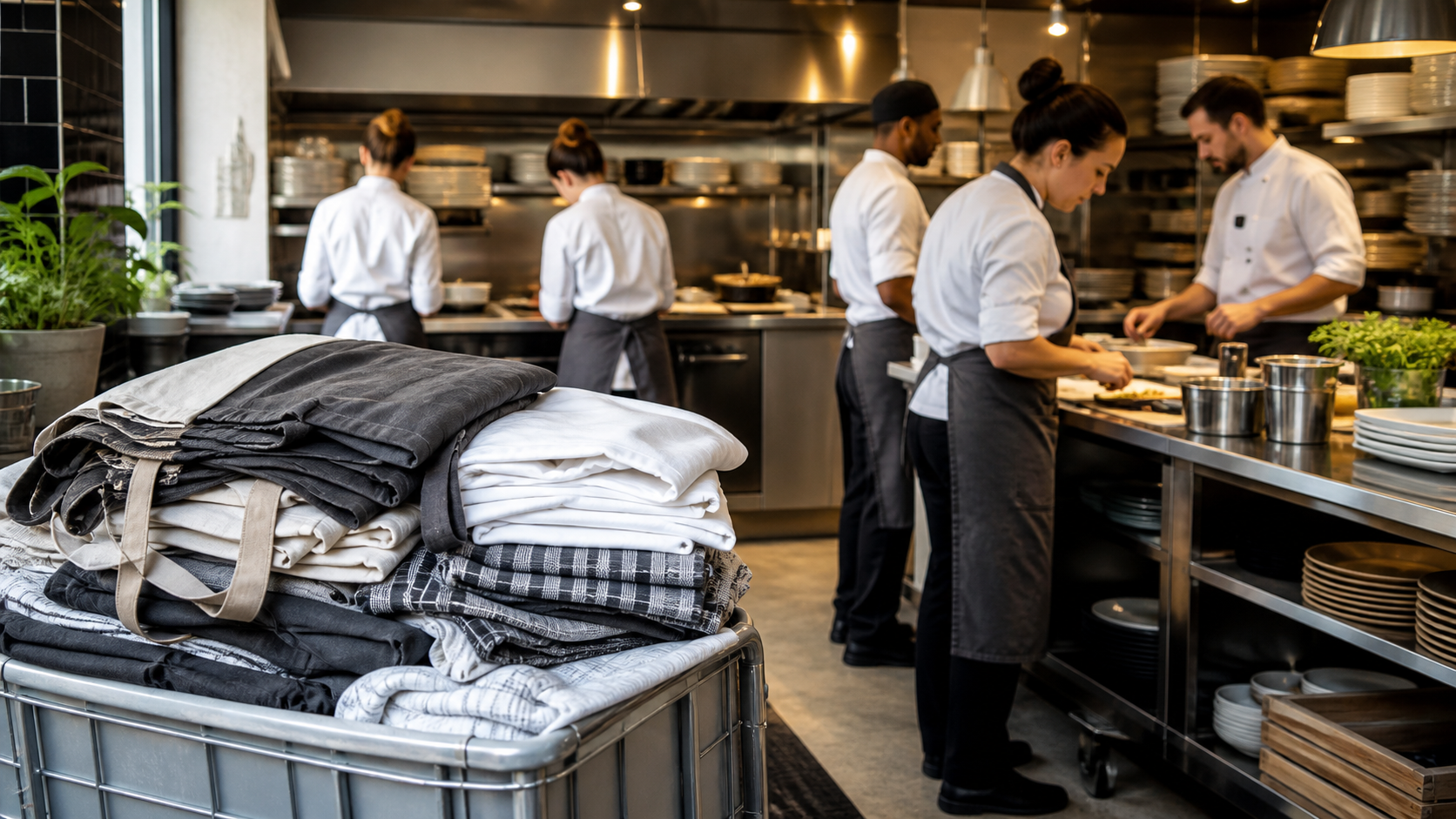
Restaurant towels, aprons, and kitchen linens move through a demanding cycle. They absorb water, grease, sauces, cleaning residue, and food soil, often several times during a single shift. When laundry is treated as an afterthought, shortages, lingering odors, stained aprons, and inconsistent folding can become everyday operational problems.
A smarter plan connects collection, sorting, wash capacity, inventory, and delivery expectations. It should support the restaurant's own food-safety procedures without asking cooks, servers, or managers to improvise laundry decisions during a rush. Here is a practical framework for local restaurant owners and kitchen managers evaluating an in-house process or commercial laundry support.
Inventory every washable textile by use
Start with a simple count of bar towels, sanitizer towels, side towels, aprons, chef coats, table linens, napkins, mop heads, and other washable items. Note where each item is used, how quickly it becomes soiled, and how many are needed for one full operating day.
Different textiles should not automatically share one load. Front-of-house napkins may need a different finish than greasy kitchen towels. Cleaning cloths should be handled according to the restaurant's sanitation plan, and heavily contaminated items may require a specialized process. A written inventory prevents the laundry area from becoming a pile of indistinguishable fabric.
Use clearly labeled collection points
Place durable, ventilated collection containers near the work areas that generate laundry, without creating a trip hazard or violating food-handling procedures. Separate wet items from dry items when possible. Never leave damp towels compressed in a sealed bag for hours; trapped moisture and food soil can intensify odors and make stains harder to address.
Train employees to empty pockets, remove non-laundry items, and place textiles in the correct container. Keep clean-linen storage physically separate from soiled collection. The goal is a repeatable flow that reduces cross-contact and lets the person handling laundry identify each load without guessing.
Sort by soil, color, fabric, and required process
A one-load-fits-all approach is rarely ideal. Sort light and dark colors when dye transfer is a concern. Separate lint-producing items from smooth uniforms. Keep greasy towels away from lightly soiled aprons, and follow the textile manufacturer's care instructions.
Pre-treat stains promptly with a product approved for the fabric and workplace. Do not mix cleaning chemicals, and never assume that extra bleach or detergent will solve a difficult load. Product overuse can damage fibers, leave residue, and increase rinse requirements. Restaurants should align textile handling with their health, safety, chemical-use, and hazard-communication policies.
Match machine capacity to peak demand
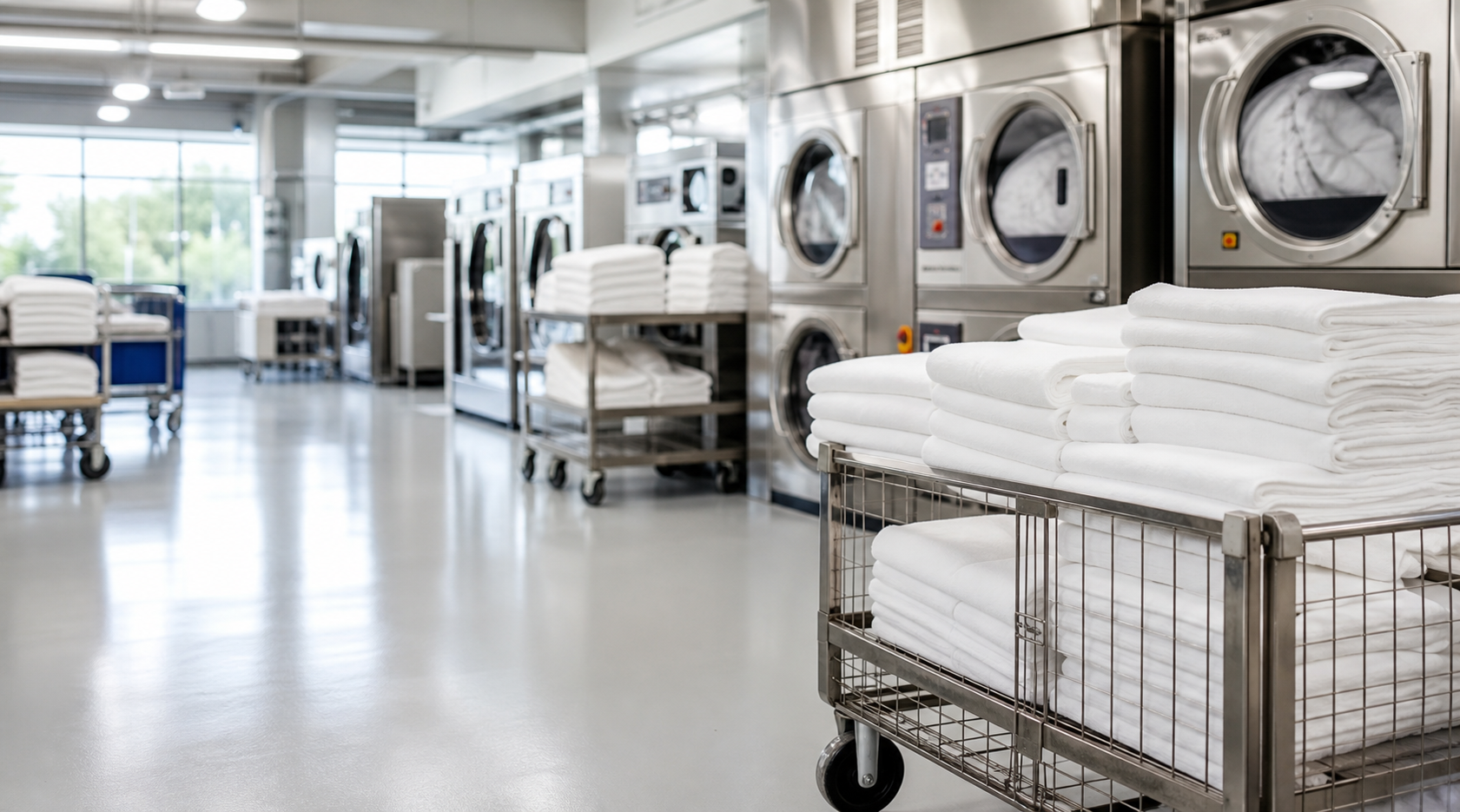
The right question is not whether an in-house washer can run one load; it is whether the operation can process peak-week volume without delaying service work. Consider wash time, drying time, folding, equipment cleaning, employee supervision, utilities, maintenance, rewash rates, and the space occupied by machines and clean inventory.
Overloading reduces mechanical action and rinse performance. Underestimating dryer time creates another bottleneck, especially with thick cotton towels. A commercial laundry partner can provide capacity without asking restaurant employees to stay late to finish the final load. WaveMAX commercial laundry service is designed for local businesses that need reliable wash, dry, and fold support.
Establish quality standards before outsourcing
“Clean” should be defined in practical terms. Agree on sorting, preferred detergent or fragrance considerations, folding style, packaging, acceptable stain outcomes, and what happens when an item is damaged or cannot be restored. Share accurate information about fabric types and the kinds of soil normally present.
Ask how pickup and delivery windows work, what minimums or preparation steps apply, and how schedule changes are handled. Keep a written point of contact on both sides. A short service checklist is easier to use than relying on verbal instructions that change from shift to shift.
Maintain enough par inventory
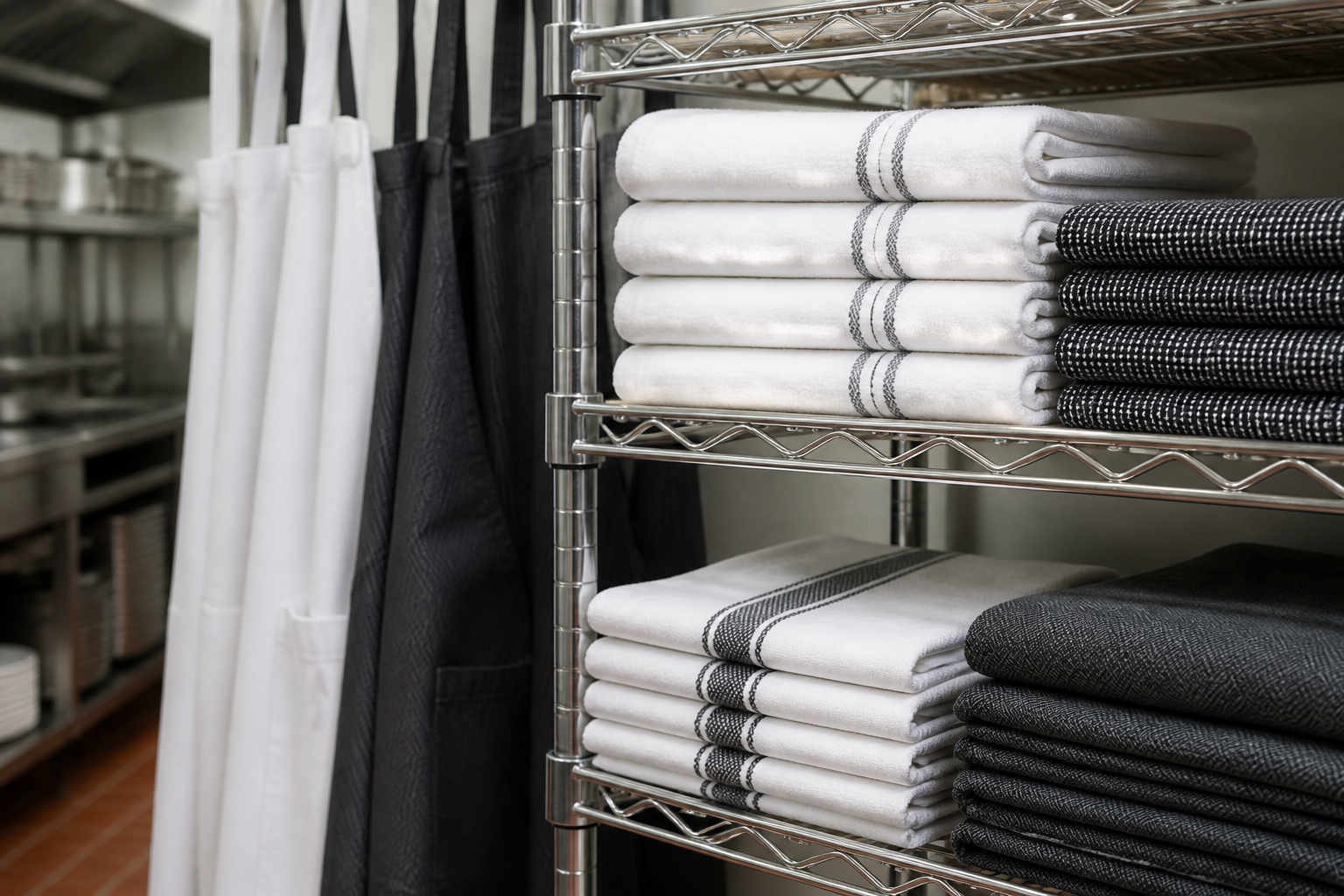
Par level means having enough textiles in circulation to cover use, laundry turnaround, and a reasonable buffer. If a restaurant uses 100 towels during a peak day, owning only 110 creates constant risk. A delayed load, spill-heavy shift, or special event can empty the shelf.
Calculate normal daily use, peak daily use, expected turnaround, and replacement needs. Label storage shelves so staff can see shortages early. Retire torn or permanently damaged textiles instead of sending them through repeated wash cycles. Good inventory planning reduces emergency purchases and helps the laundry provider deliver consistent bundles.
Track the costs that are easy to miss
In-house laundry costs include more than detergent. Add employee time for collection, sorting, loading, transferring, folding, cleaning equipment, and handling rewashes. Include water, gas or electricity, repairs, vent maintenance, machine replacement, storage space, and management oversight.
Outsourcing has its own costs, so compare the full process rather than a single per-pound or per-load number. The earlier guide Commercial Laundry vs. In-House Laundry explains the broader decision. For some restaurants, outsourcing every textile makes sense; others may keep a small emergency load in-house while sending routine volume to a local provider.
Protect consistency with a written weekly rhythm
Create a schedule based on operating days and peak periods. Identify who closes each bag, who confirms the count, where pickup occurs, and where completed laundry is received. Build in extra capacity before holidays, catering events, and patio season.
Review results after the first few service cycles. Are bundles arriving when expected? Are aprons folded consistently? Are certain stains recurring because collection is too slow? Adjust the process before small issues become normal. A commercial laundry relationship works best when both parties have accurate expectations and communicate early.
How WaveMAX can support local restaurants
WaveMAX Thornton provides commercial laundry options for businesses in the published local service area, including wash, dry, and fold support and convenient service choices. Restaurants can also use drop-off laundry service or ask about pickup and delivery depending on current availability and volume.
To explore fit, gather a one-week textile count, note fabric types and major soil categories, and contact WaveMAX. A short conversation about volume, turnaround, storage, and service area can clarify whether outsourcing all or part of the workload would make restaurant operations simpler.