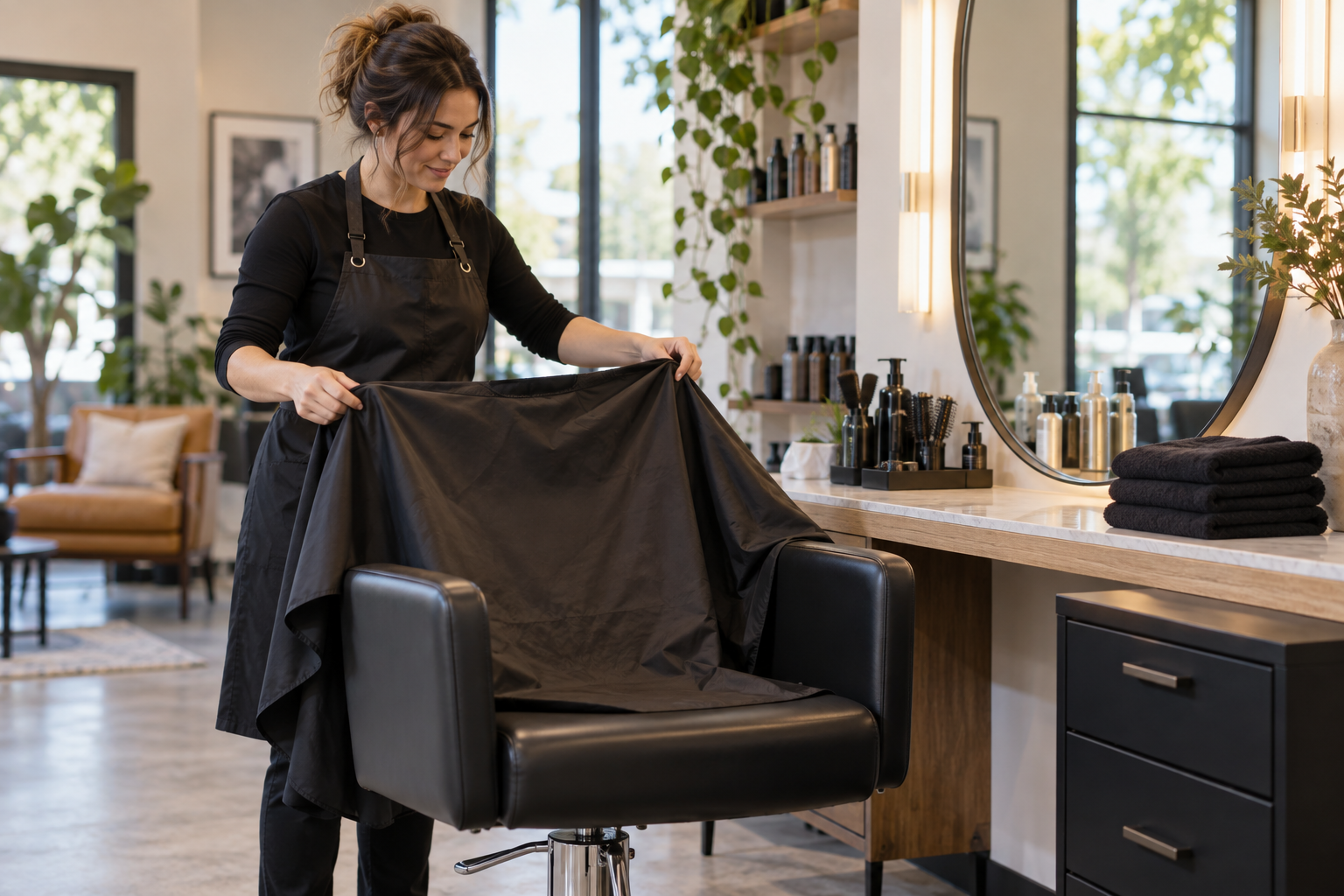
A salon can run behind because an appointment lasts longer than expected. It should not also run behind because the clean towel shelf is empty. Towels, capes, and other washable textiles support nearly every part of the day, but their laundry cycle is easy to overlook until someone is waiting for a dryer to finish.
A reliable weekly rotation connects appointment demand, textile care, collection, washing, and storage. It does not require treating every salon the same. A small appointment-only studio and a busy multi-chair location need different amounts of stock, but both benefit from clear ownership and enough clean inventory to bridge the next laundry return.
Count use by service, not just by day
Start by listing the washable textiles your salon actually uses: shampoo towels, hand towels, washable capes, staff garments, and any other items that belong in the laundry process. Record how many are used for different appointment types and during the busiest stretches of the week. A quiet weekday average can hide the demand created by a full Saturday schedule.
Track actual use over a representative period rather than estimating from the size of the hamper. Note events that change demand, including extra staff, longer color appointments, seasonal bookings, or a one-time promotion. Keep the count practical enough that someone can update it without interrupting client care. The aim is to identify when stock gets tight, not to create a complicated new administrative job.
Build stock around the full turnaround window
Par inventory is the total supply needed to cover items in use, items awaiting or undergoing laundry, and a reasonable reserve. Start with the number required before the next confirmed clean-laundry return. Then add a buffer for higher demand, rewash needs, damaged towels, or a missed collection window. Do not use a universal multiplier without checking your own service schedule.
Count usable items, not every towel your salon has ever purchased. Frayed towels, damaged closures, badly worn capes, and textiles set aside for stain assessment should not be treated as immediately available stock. Decide who can remove an item from service and how replacements are ordered. A small written minimum for the clean shelf makes shortages visible before the next shift begins.
Give towels and capes separate care decisions
A cotton salon towel and a coated cape may not tolerate the same wash temperature, products, or dryer setting. Read each manufacturer's instructions, including guidance for snaps, hook-and-loop fasteners, elastic, water-resistant coatings, and printed decorations. A cape advertised as washable still needs its specific care limits respected.
Keep items requiring different processes apart from the beginning. Do not mix disposable neck strips or other single-use materials into washable stock. If you are buying replacements, consider how well the new textile fits the laundry routine you can actually support. Matching care requirements can simplify sorting, but convenience should not override a product's intended use or the salon's applicable hygiene procedures.
Identify product-soiled textiles before collection
Hair dye, lightener, styling products, oils, and cleaning chemicals create different handling questions. The person arranging laundry should know what is on the textiles and explain it to the provider. Do not assume that a darker towel hides a handling concern or that every visible stain can be removed. Appearance, cleaning, and chemical safety are separate issues.
Keep unknown, hazardous, or heavily contaminated items out of an ordinary laundry order until you have appropriate instructions. Follow product safety information and the salon's workplace procedures. Never send solvent- or flammable-oil-contaminated cloths through a routine washer or dryer. For dye- or product-soiled towels, confirm acceptance and handling requirements explicitly rather than relying on a general statement that salon laundry is offered.
Make the clean-to-used path obvious
Store clean, fully dry towels and capes in a protected area away from splash, product preparation, and used-laundry collection. Place used-textile containers where staff can reach them without crossing clean stock unnecessarily. Choose collection methods consistent with your workplace procedures, and do not leave damp textiles compressed for extended periods without a safe handling plan.
Assign separate areas or containers for different care groups. Staff should know where an ordinary used towel goes, where a cape with special instructions belongs, and where an item needing supervisor review is held. A simple handoff process prevents the next person from having to guess. Clean storage and correct handling remain the salon's responsibility even when washing is outsourced.
Define the laundry service before setting a schedule
WaveMAX's commercial laundry service includes support for local salons and other businesses. Start the conversation with your textile types, approximate volume, care-label requirements, and the products normally present. Ask about sorting, acceptable items, no-softener requests, drying limits, folding, packaging, stain expectations, and how problems are reported.
Review the towel laundry service information, but do not treat a general service description as confirmation of a custom process. Standard household wash-dry-fold settings may not suit every cape or specialty towel. An initial agreed test order can help you assess the result before moving the full salon inventory into a recurring routine. Do not imply that outsourcing alone establishes regulatory compliance or guarantees sanitation outcomes.
Match collection windows to appointment pressure
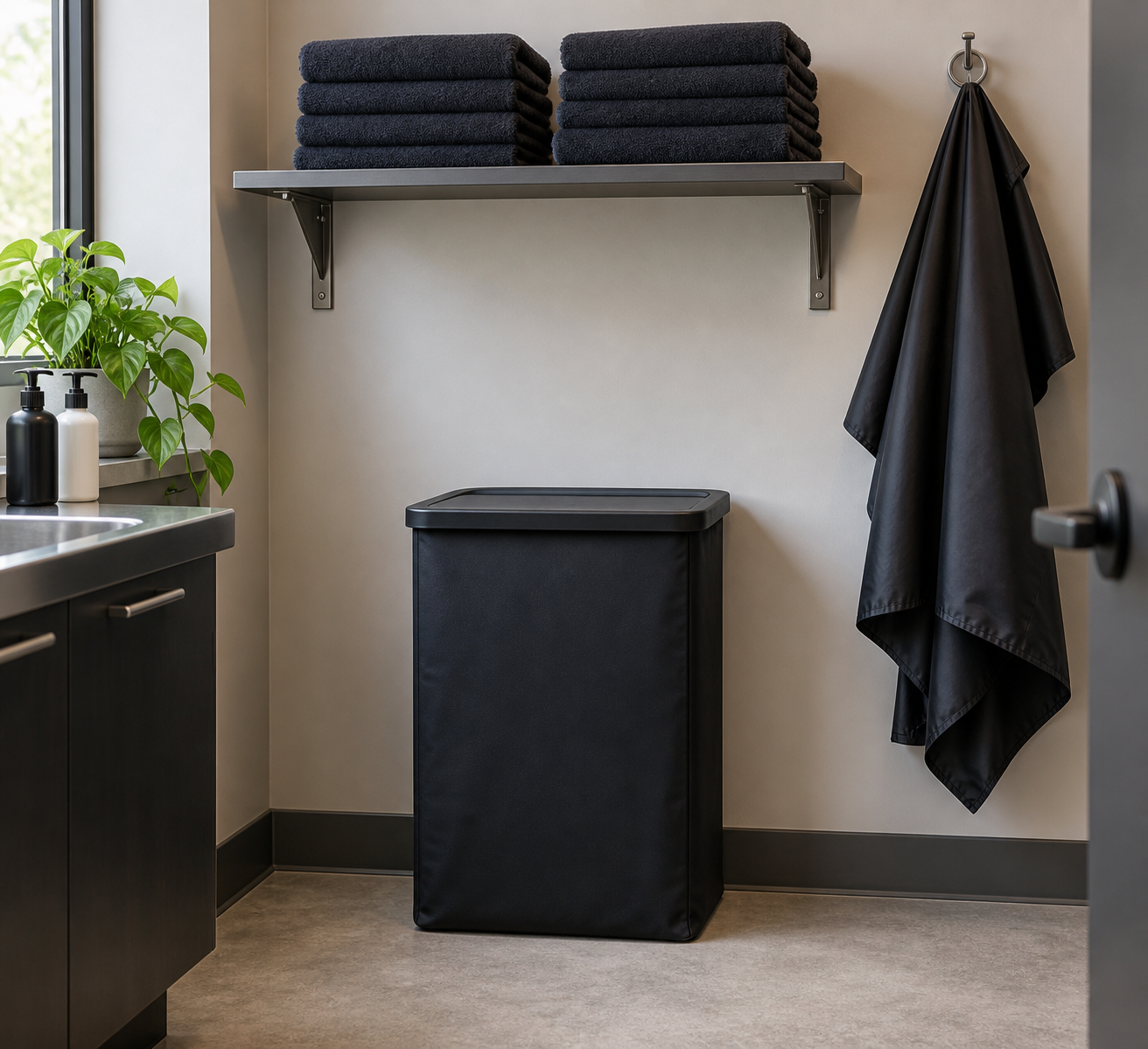
Schedule around when clean stock is needed, not merely when the hamper looks full. If the busiest appointments begin before a proposed delivery return, the laundry schedule or reserve inventory needs to change. Confirm the exact location, collection instructions, business access, return window, and contact person. Include holiday closures and building access restrictions in the plan.
Pickup and delivery may reduce staff transport time when your address and schedule are supported. Verify coverage for the actual salon address and ask how changes or missed pickups are handled. A city name in a service-area list is not a promise that every address or special request is available. Keep an alternative plan for an unexpected interruption rather than consuming the entire clean reserve at once.
Check every return before shelving it
Give one person responsibility for receiving clean laundry and noting obvious shortages, remaining stains, dampness, damaged edges, or missing closures. Assess textiles against the expectations agreed with the provider. A towel that needs review should be kept out of ready-to-use stock until its disposition is clear.
Rotate clean stock so older usable items are not buried indefinitely behind new deliveries. Avoid packing shelves so tightly that staff pull down multiple piles to reach a towel. The broader towel care guide can help with storage and absorbency habits, while each textile's care label remains the authority for its washing process. Track recurring problems so you can discuss patterns rather than isolated impressions.
Review the routine when the business changes
Add laundry planning to changes in staffing, appointment mix, opening hours, and purchasing. More clients or a new treatment may affect towel demand even if the number of chairs stays the same. Review whether employees are spending unexpected time transporting, rewashing, or searching for stock. Those interruptions belong in the comparison between in-house and commercial laundry.
Keep the process short enough to follow: count the clean shelf, segregate exceptions, prepare the agreed collection, receive and inspect returns, then replenish the reserve. A reliable routine should make the day easier for stylists, not depend on one person remembering every detail from memory.
Start with your next busy week
Choose the busiest upcoming appointment period and work backward from the clean towels and capes it requires. Confirm care instructions, service compatibility, and turnaround before committing to a rotation. Contact WaveMAX Thornton with those details to discuss a practical local laundry plan that supports the salon you run, without promises your textile labels or schedule cannot support.