Moving creates a strange laundry problem: you are packing the clothes you need while still wearing them, dismantling the room where you wash them, and trying to remember which box contains clean sheets. Without a plan, the first night in a new home can end with damp towels, a missing work outfit, and no usable washer.
A moving-week laundry checklist does not need to cover every item you own. Focus on timing, clean and dirty separation, complete drying, and a small set of essentials that stays with you. Then decide how you will handle laundry until the next home's equipment and routines are ready.
A week before: confirm your washer-access gap
Find out when you will lose access to the old washer and when the new laundry setup will actually be usable. Those may not be the same day as the move. Installation appointments, shared-laundry access, utility activation, or a delayed appliance delivery can create a gap that lasts longer than expected.
If appliances are moving with you, follow the manufacturer's transport guidance and use qualified help for disconnection and reconnection when needed. Laundry planning is not a reason to improvise plumbing, electrical work, or heavy lifting. Identify a backup washing option before the machines are unavailable so you are not searching for one after the last clean school uniform is packed.
Sort clothes into pack, wear, wash, and special-care groups
Pack clean seasonal and less-used clothes first, leaving current essentials accessible. Set aside items that need washing and those requiring professional cleaning or unusual care. A simple group system is more useful than emptying every drawer into mixed boxes and promising to sort it all later.
Check pockets, repair obvious loose fasteners if appropriate, and remove items you no longer plan to keep. Do not spend moving week laundering clothes solely to carry them into another home's donation pile. Keep care labels in mind when combining loads, especially for workwear, athletic fabrics, and delicate garments that should not share the standard household drying process.
Wash linens early enough to dry completely
Give sheets, towels, and washable bedding their own place on the schedule. Thick seams, folded corners, and bulky filling can retain moisture after the outside feels dry. Check these areas before sealing a bag or box. A move is exactly the wrong time to trap hidden dampness in a container that may not be opened for several days.
Use the bulky bedding guide to think through capacity, care labels, and drying rather than forcing a comforter into an overloaded machine. If a label calls for professional care, keep that item separate. Pack only fully dry textiles in clean containers, and avoid loading laundry immediately after it has been sitting on a dirty moving floor or exposed outdoor surface.
Choose your last big laundry day deliberately
Do the main household wash before the final rush of disconnection, key handover, and packing. Leave a smaller catch-up window for the items worn afterward. Sorting by urgency helps: first-night bedding and work clothes need a reliable finish, while spare blankets can wait if the schedule becomes tight.
Self-service laundry can help when home equipment is unavailable or larger loads need appropriate machine capacity. Plan enough time for washing, drying, and folding, and check the current opening hours before leaving. Avoid treating a posted average drying time as a guarantee for a heavy bedding load. Fabric type, load size, and care-safe heat settings all affect the visit.
Consider help if packing has consumed the day
Drop-off laundry service can free you from doing every cycle yourself while boxes and appointments compete for attention. Ask about the current turnaround and explain your actual deadline. Do not send the only clothes you need for moving day unless the confirmed return time leaves a comfortable margin.
Review the wash-dry-fold preparation guide before handing over an order, then confirm your special requirements directly. Use bags for WaveMAX drop-off orders, check every pocket, and identify stains or restricted-care items. Standard service does not automatically suit every fabric. Keep dry-clean-only pieces and anything requiring a process the team has not accepted out of the ordinary wash order.
Pack a first-night and first-workday bag
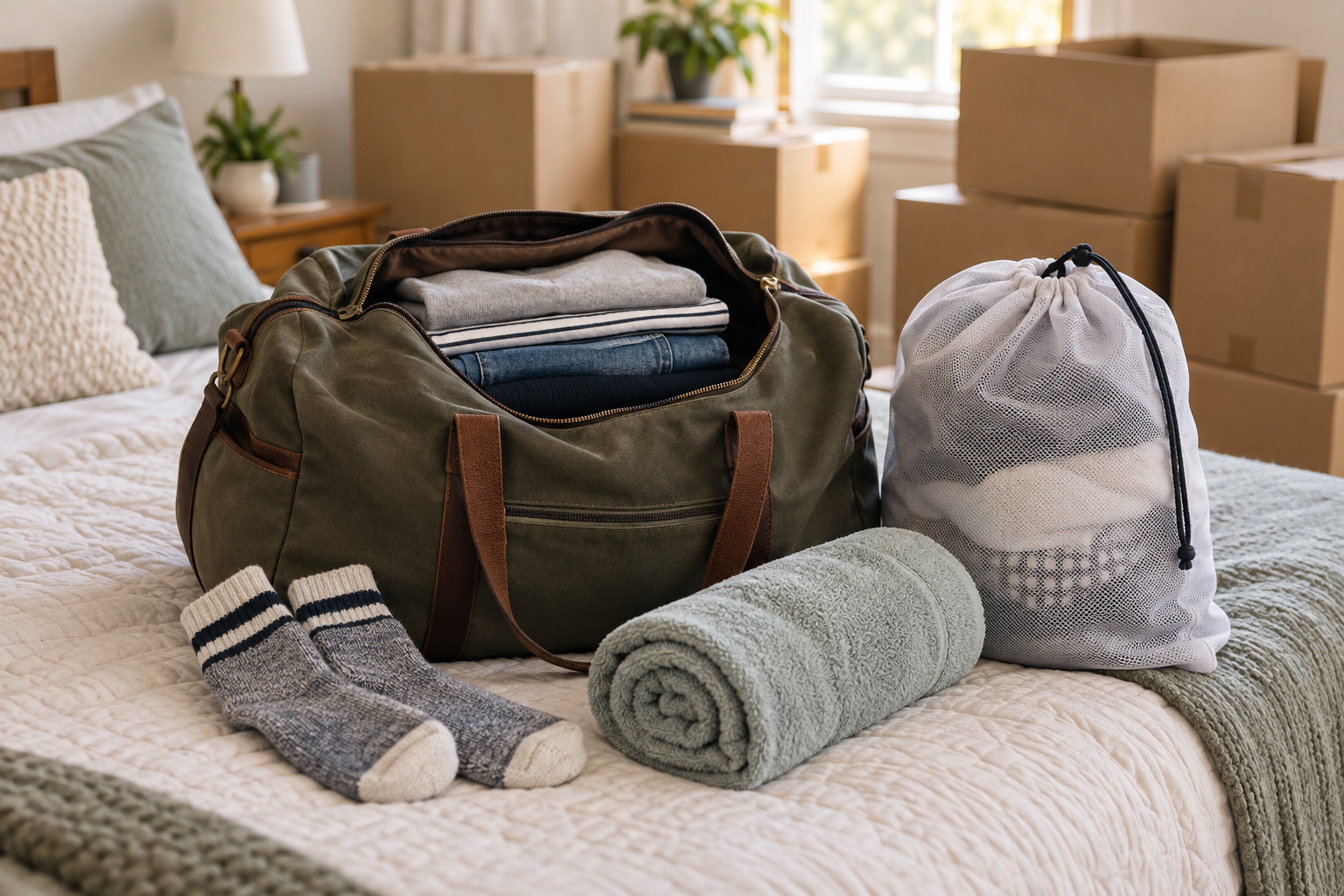
Keep a small bag with you rather than sending it deep into the moving truck. Include clean underwear and socks, sleepwear, a change of clothes, the next necessary work or school outfit, and an accessible towel. Add whatever textile essentials your household specifically needs, such as a child's familiar washable blanket.
Set aside clean sheets for the beds you will use first. Make them easy to identify without unpacking every linen box. A separate empty laundry bag belongs in the essentials kit too, so used clothing has a clear destination from the first night onward. This prevents the clean suitcase from becoming a mixed hamper before the bedroom is set up.
Moving day: keep clean, dirty, and damp items apart
Cleaning the old home, carrying boxes, and dealing with weather can generate a new batch of laundry after the main wash is finished. Keep those clothes separate from packed clean items. Put used cleaning cloths into their own appropriate collection group rather than mixing them with bedding or children's clothes.
Do not pack solvent-, oil-, or hazardous-chemical-contaminated rags into normal laundry, and follow the cleaning product's safety instructions. For ordinary damp towels or clothing, arrange prompt washing and drying rather than leaving them compressed through a long delay. Protect clean textiles from wet truck floors and spilled products, and keep laundry bags away from paints, cleaners, and other leak-prone moving supplies.
First days after: inspect before restarting the routine
At the new home, confirm that the laundry equipment is installed, connected, and ready according to the manufacturer's or installer's instructions. If a shared laundry room is involved, learn its access rules, machine instructions, and operating hours. Do not assume the process is identical to your last building.
Unpack essential clean clothes and linens first, then create a place for used laundry. A basic hamper system can work before the rest of the room is organized. Keep the early wash loads manageable instead of trying to run every textile at once. If items developed stale odors in transit, inspect for moisture and address the cause rather than simply adding fragrance or putting damp fabric into storage.
Check delivery coverage for the new address
If pickup and delivery laundry fits your new routine, verify service for the exact new address before scheduling. A move within the same broad metro area does not automatically preserve delivery eligibility, pickup access, or the same available windows. Update unit numbers and clear access instructions through the appropriate booking process.
Confirm where laundry should be left, when it will be returned, and who will receive it. Keep private entry codes out of ordinary bag labels and public-facing notes. WaveMAX serves local Northern Denver Metro customers, but your actual address and service window need confirmation. Do not plan a first-day essential around an unconfirmed pickup or return.
Settle into a routine you can maintain
After the first boxes are unpacked, choose a realistic laundry day and decide which items need separate handling. Make room for clean storage, keep detergent safely away from children and pets, and avoid letting the temporary moving pile become a permanent system. A small routine is easier to maintain than repeated emergency catch-up loads.
For Thornton-area households, WaveMAX offers self-service and laundry service options that can bridge a move or become part of a regular schedule. Check hours and location before visiting, and contact the team about current service details. Clean, dry essentials and a clear next laundry step make settling into a new home a little less complicated.