Towels are one of the hardest-working items in your home. They dry hands, faces, dishes, kids, pets, guests, and post-shower routines every single day. So it is no surprise that towels can start to feel stiff, smell musty, or lose their absorbency over time.
The good news is that most towel problems are fixable. With the right wash routine, a little less detergent, and a few smart drying habits, you can help your towels stay softer, fresher, and more absorbent for longer.
Here are some practical towel laundry tips to try at home…
Do Not Use Too Much Detergent
It may seem like extra detergent would make towels cleaner, but too much soap often creates the opposite problem. Towels are thick and absorbent, which means detergent can build up deep in the fibers if it is not fully rinsed away.
Over time, that residue can make towels feel stiff or waxy. It can also trap odors, especially if towels are stored before they are fully dry.
For most towel loads, use the recommended amount of detergent or slightly less. If your towels are not heavily soiled, you probably do not need a full cap or scoop. A good wash should clean the towels and rinse out completely.
Skip Fabric Softener on Towels
Fabric softener can make laundry feel smooth, but it is not ideal for towels. Many softeners leave a coating on fabric fibers. That coating can reduce absorbency, which means your towels may feel soft in the short term but become less useful over time.
If your towels are no longer absorbing water the way they used to, fabric softener buildup may be part of the problem.
Instead, try washing towels without fabric softener for a few cycles. You can also use wool dryer balls in the dryer to help separate towels, improve airflow, and reduce drying time.
Wash Towels Separately When You Can
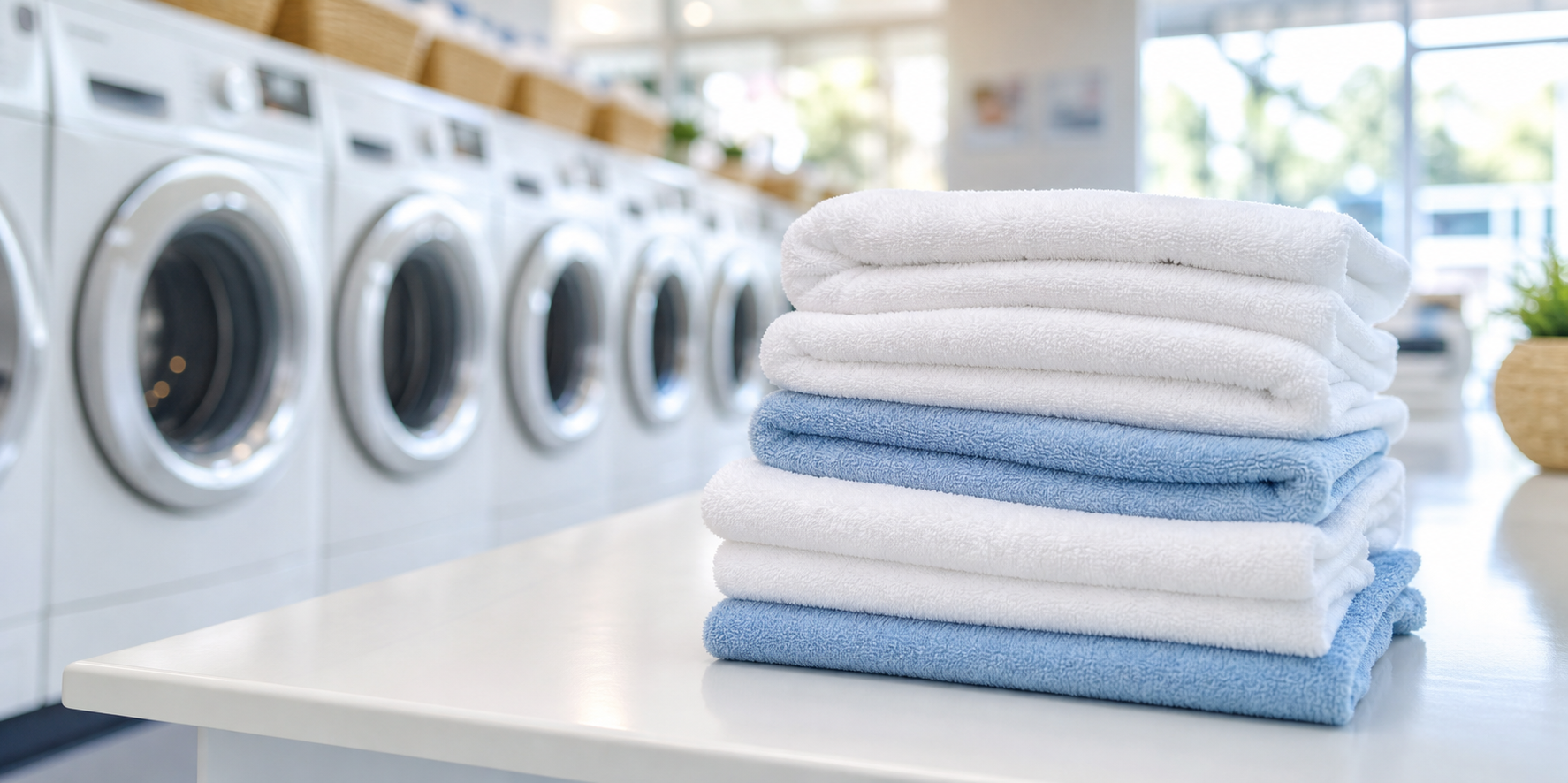
Towels do best when they are washed with other towels. Mixing towels with clothing can cause lint transfer, uneven drying, and extra wear on lighter fabrics.
A dedicated towel load also gives your towels more room to move through the wash and rinse cycles. That helps remove detergent, body oils, and residue more effectively.
If you have a large household, sports towels, pool towels, or guest towels, saving them for one towel-only load is usually worth it.
Use Warm or Hot Water When Appropriate
Always check the care label first, but many cotton towels can handle warm or hot water. Warmer water can help remove body oils, detergent buildup, and odor-causing residue better than cold water alone.
That said, hot water is not always necessary for every load. For lightly used towels, warm water may be enough. For towels that smell sour, have been sitting damp, or were used after workouts, a warmer wash can help.
If your towels are brightly colored, be mindful that repeated hot washes may contribute to fading over time.
Do Not Let Damp Towels Sit Around
Musty towel smells often start before the towels ever reach the washing machine. Damp towels left in a pile, gym bag, hamper, or washing machine can develop mildew odors quickly.
Try to hang wet towels so they can dry before laundry day. If a towel is already damp, avoid tossing it into a closed hamper with dry clothes. The moisture can spread odor to the whole load.
The same rule applies after washing: move towels to the dryer promptly. A clean towel load can still develop a sour smell if it sits in the washer too long.
Dry Towels Completely
Towels need enough drying time. If they are folded or stored while still slightly damp, they may smell musty the next time you use them.
Avoid overstuffing the dryer. A packed dryer takes longer, traps moisture, and can leave thick towels damp in the center. Shake towels out before drying so they do not stay twisted together.
If you are drying a large towel load at a laundromat, using the right-sized dryer can make a big difference. More space means better airflow and more even drying.
Refresh Towels That Feel Stiff or Musty
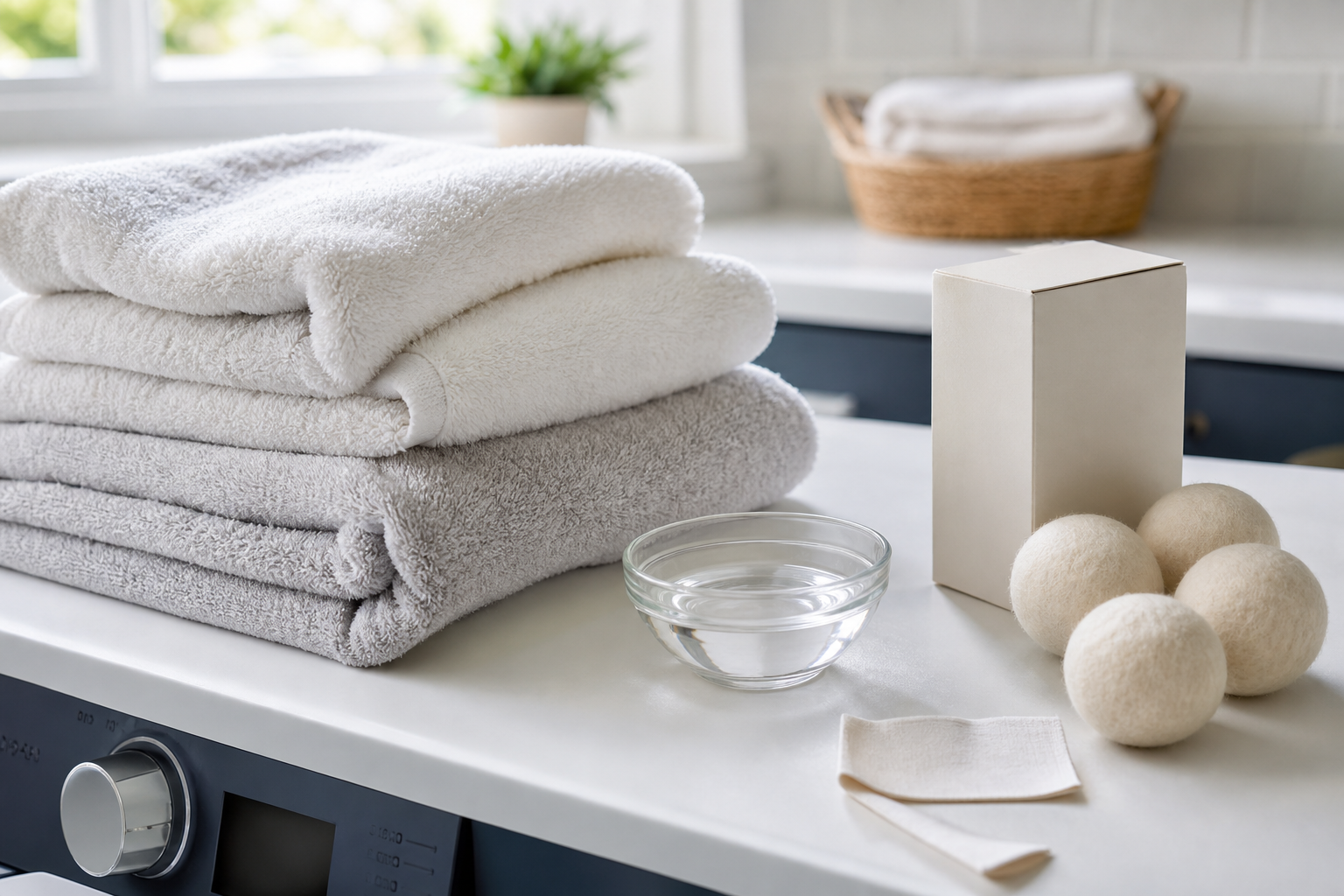
If your towels already feel stiff or smell musty, try a reset wash. Wash the towels with detergent and avoid fabric softener. Some households also use a small amount of white vinegar in the wash routine to help reduce residue and odors, but check your machine instructions and towel care labels first.
After the wash, dry thoroughly. You may need a few fabric-softener-free washes before towels regain better absorbency.
Know When It Is Time to Replace Old Towels
Even with great care, towels do not last forever. If a towel is fraying, thin, rough, or no longer absorbent after repeated washing, it may be time to retire it.
Old towels can still be useful as cleaning rags, pet towels, garage towels, or emergency spill towels.
Keep Your Towels Fresh With the Right Routine
Soft, fresh towels come down to a few simple habits: use the right amount of detergent, avoid fabric softener buildup, wash towels with enough space, dry them completely, and never let damp towels sit too long.
If you have a big towel load, bulky bath sheets, pool towels, or a week’s worth of family laundry, WaveMAX Laundry can help. Our large-capacity machines are designed to handle oversized loads, and our wash-dry-fold service can save you time when laundry starts piling up. WaveMAX Laundry in Thornton also offers ozone-enhanced laundry, which helps sanitize fabrics and reduce odors without relying on harsh additives. It is one more way our laundry process helps towels come back fresh, clean, and ready to use. Learn more in our post, Nature’s Disinfectant: What is Ozone in Laundry?
Bring your next towel load to WaveMAX Laundry in Thornton, or let us take laundry off your to-do list with convenient wash-dry-fold service.